


How distributed ledger technology can unlock trust, inclusion, and new economic infrastructure for emerging markets
Introduction: Beyond Digital Adoption Toward Digital Ownership
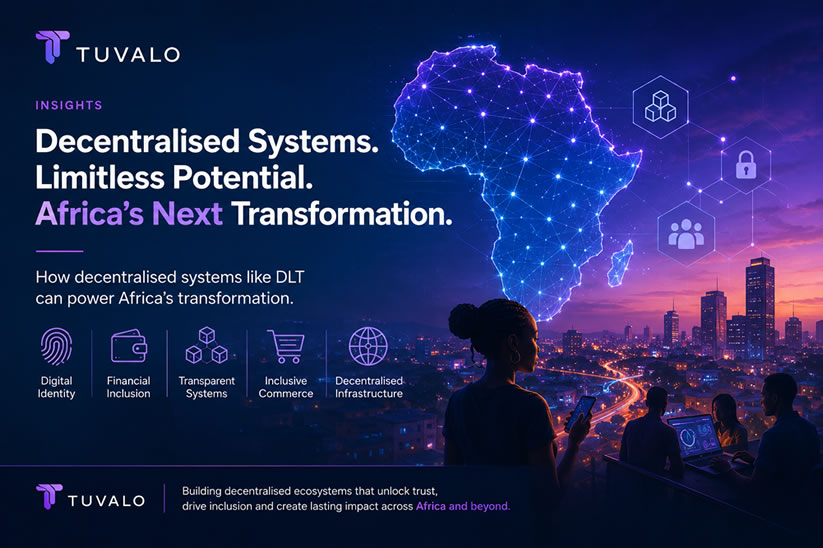
Africa is entering a defining period in its technological evolution. The first wave of digital transformation connected millions of people through mobile technology, internet access, and digital services. The next wave will be about building the underlying systems that enable greater trust, participation, ownership, and economic coordination.
For decades, many of Africa’s development challenges have been linked not only to a lack of resources, but to fragmented systems: fragmented financial networks, disconnected data infrastructure, limited access to trusted digital identity, inefficient supply chains, and barriers to participation in formal economies.
Decentralised technologies, particularly Distributed Ledger Technology (DLT), present an opportunity to rethink these systems from the ground up.
Rather than simply digitising existing processes, decentralised systems allow societies to create new forms of digital infrastructure where trust, verification, ownership, and value exchange are embedded directly into technology.
The opportunity ahead is not merely to adopt blockchain technology. It is to build a new generation of digital systems designed around Africa’s unique economic realities.
The Trust Infrastructure Gap
Trust is one of the most valuable resources in any economy.
Businesses require trust to transact. Governments require trust to deliver services. Citizens require trust to participate in financial and economic systems. Yet across many emerging markets, trust infrastructure remains fragmented.
Records may exist across disconnected institutions. Verification processes can be slow and expensive. Small businesses often struggle to prove their credibility. Individuals may have limited access to financial tools because traditional systems cannot adequately assess their economic activity.
DLT introduces a new approach: a shared, tamper-resistant infrastructure where transactions, records, and digital assets can be verified without relying entirely on a single central authority.
This does not mean replacing institutions. Instead, decentralised systems can strengthen institutions by providing more transparent, efficient, and interoperable tools.
From Mobile Revolution to Decentralised Economy
Africa’s mobile revolution demonstrated that emerging markets can leapfrog traditional infrastructure models.
Mobile money transformed financial participation by enabling millions of people to access payments without relying on traditional banking infrastructure. The next leap could come from decentralised systems that create broader digital ecosystems around identity, commerce, finance, and participation.
Future digital economies will not simply be built on applications. They will be built on networks.
These networks can enable:
- Digital identity systems that allow individuals and businesses to establish trusted online presence.
- Transparent supply chains where goods and transactions can be verified.
- Digital financial systems that expand access beyond traditional banking models.
- New models of ownership where participation in networks can create economic opportunities.
- Interoperable platforms where businesses, governments, and communities can connect seamlessly.
Building Infrastructure for the Digital Economy
The greatest opportunities in emerging markets will come from companies that build foundational infrastructure.
Africa does not only need more digital products. It needs the underlying rails that allow millions of people, businesses, and institutions to participate effectively in the digital economy.
This requires a shift from thinking about technology as isolated applications toward thinking about technology as ecosystems.
A decentralised digital ecosystem could combine:
- Secure digital identity
- Distributed data infrastructure
- Digital payments and value exchange
- Business verification systems
- Community participation networks
- Artificial intelligence-driven services
- Digital marketplaces
- Secure communication infrastructure
The result would be a more connected economic environment where trust and participation are built into the architecture itself.
The Role of African Technology Companies
The next generation of African technology companies will have a unique opportunity: building solutions specifically designed for emerging markets while creating platforms capable of scaling globally.
The most impactful companies will not simply copy existing models from mature markets. They will understand local challenges, leverage new technologies, and create systems that reflect the realities of millions of users entering the digital economy for the first time.
This requires long-term thinking.
Building decentralised infrastructure requires patience, partnerships, technical expertise, and a commitment to solving complex problems. The companies that succeed will be those that combine innovation with execution.
A New Era of Digital Participation
Decentralised systems represent a fundamental shift in how societies organize trust, exchange value, and coordinate activity.
For Africa, this shift creates an opportunity to move beyond simply consuming digital technologies and toward creating the infrastructure that powers future economies.
The coming decade will likely see the emergence of digital ecosystems where individuals, businesses, institutions, and governments interact through trusted networks designed for scale.
At Tuvalo, we believe the future belongs to companies that build these foundational systems — technologies that do not merely improve existing processes, but create entirely new possibilities for participation, ownership, and economic growth.
The next transformation of Africa will not only be digital.
It will be decentralised.