


The next wave of economic connectivity may not come from faster internet—but from billions of devices talking directly to one another.
For decades, digital transformation has largely been synonymous with internet connectivity. Governments invested in broadband, telecom operators expanded mobile networks, and businesses rushed online. These developments have transformed commerce and communication, but they also exposed a fundamental limitation: much of Africa’s digital economy still depends on continuous internet access and centralized cloud infrastructure.
The next stage of Africa’s technological evolution may look very different.
It may be powered by intelligent local networks—where phones, businesses, sensors, vehicles, payment terminals, public infrastructure, and everyday devices communicate directly with one another, creating resilient digital ecosystems that continue to operate even when internet connectivity is limited.
One technology quietly making this possible is Bluetooth Low Energy (BLE) Mesh.
Beyond Bluetooth
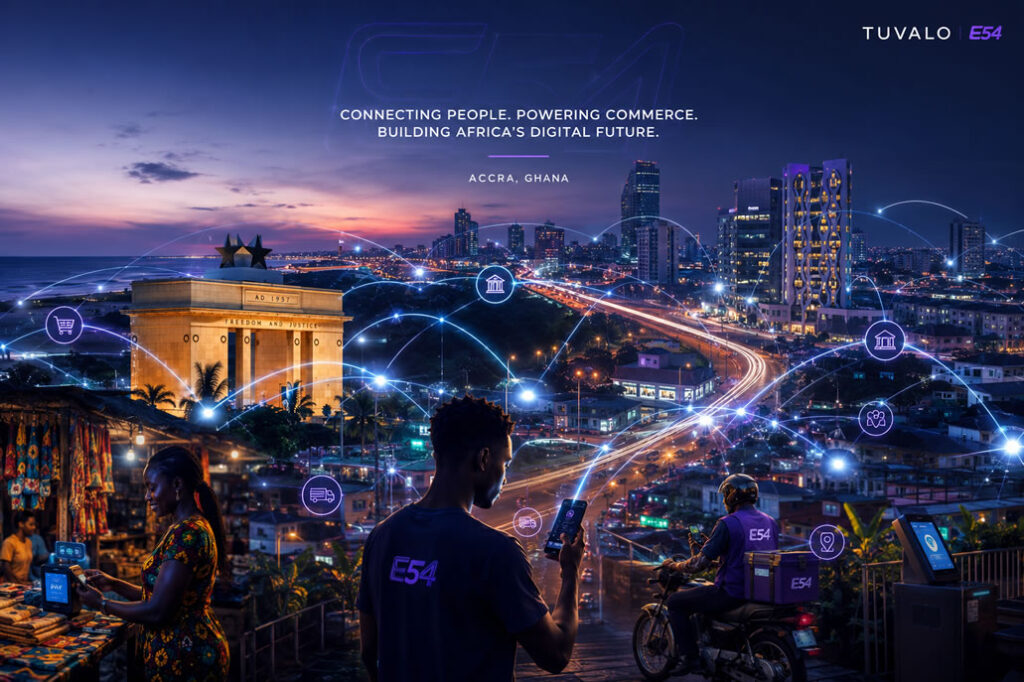
Most people associate Bluetooth with wireless earphones or file sharing.
BLE Mesh is something far more significant.
Unlike traditional Bluetooth connections between two devices, BLE Mesh enables thousands of devices to communicate across a distributed network. Every participating device can relay information to others, allowing messages to travel across an entire community without requiring each device to connect directly to the internet.
In effect, every device becomes part of the infrastructure.
Instead of relying solely on centralized servers, intelligence begins to exist throughout the network itself.
Building Local Digital Economies
Africa’s future digital economy will not only exist online.
It will increasingly exist within cities, communities, marketplaces, campuses, industrial parks, transportation corridors, and neighbourhoods where people interact physically every day.
Imagine walking through a commercial district where local merchants automatically become digitally discoverable.
Nearby services appear instantly.
Local delivery agents coordinate in real time.
Payment systems communicate securely.
Community announcements propagate across the network.
Businesses verify each other’s presence automatically.
Public infrastructure continuously exchanges operational information.
All of this can happen locally before information is synchronized with cloud services.
Rather than every interaction travelling through distant servers, much of the intelligence remains within the local economy itself.
The Rise of Ambient Commerce
Traditional e-commerce requires consumers to search.
Future commerce may simply discover you.
As mesh-enabled environments become more intelligent, nearby businesses, products, services, and opportunities could become contextually visible based on proximity, preferences, permissions, and local demand.
Physical communities begin developing their own digital presence.
Markets become searchable.
Street vendors become discoverable.
Service providers become instantly reachable.
Micro-enterprises become visible participants in larger digital ecosystems.
The distinction between online and offline commerce gradually disappears.
Infrastructure That Grows Organically
One of the most compelling characteristics of mesh technology is that infrastructure expands naturally.
Each new participating device strengthens the network.
Every smartphone.
Every payment terminal.
Every retail location.
Every logistics hub.
Every public sensor.
Every connected vehicle.
Every community node.
Instead of requiring massive centralized deployments before value can be created, distributed networks become stronger as participation increases.
Economic growth and network growth begin reinforcing one another.
AI at the Edge
Artificial intelligence is often viewed as something that happens inside massive cloud data centres.
Increasingly, that assumption is changing.
Edge AI allows intelligent decision-making to happen directly on devices or within local networks.
When combined with BLE Mesh, devices become capable of analysing local conditions, coordinating activity, optimizing operations, and responding to events almost instantly.
Traffic systems can adapt dynamically.
Community logistics can self-organize.
Energy usage can become more efficient.
Retail demand can be analysed locally.
Public safety systems can coordinate in real time.
Cloud infrastructure remains important, but intelligence becomes distributed throughout the ecosystem.
A New Model for Digital Inclusion
Digital inclusion should not be measured only by internet access.
It should also be measured by participation.
Can a small merchant become digitally discoverable?
Can informal businesses participate in digital commerce?
Can communities coordinate resources more efficiently?
Can local governments communicate directly with citizens?
Can neighbourhood economies generate useful digital data without requiring expensive infrastructure?
Distributed local networks make these possibilities increasingly achievable.
Why This Matters for Africa
Africa is urbanising rapidly.
Millions of new businesses are emerging.
Digital payments continue expanding.
Smartphones are becoming more powerful.
Cities require new models for mobility, commerce, public services, and economic coordination.
Rather than replicating legacy infrastructure from developed economies, Africa has an opportunity to build systems designed for today’s technologies.
Distributed networking represents one of those opportunities.
It enables infrastructure that is scalable, resilient, affordable, and capable of serving both dense urban centres and underserved communities.
Looking Beyond Connectivity
The conversation about digital transformation has focused for many years on connecting people to the internet.
The next conversation may focus on connecting people to each other.
Communities.
Businesses.
Institutions.
Devices.
Infrastructure.
Economic activity.
The technologies that quietly connect these elements may become some of the most valuable infrastructure of the coming decades.
At Tuvalo, we believe Africa’s next digital leap will not be defined solely by faster networks or larger data centres. It will be defined by intelligent, distributed ecosystems that bring technology closer to people, strengthen local economies, and enable entirely new forms of participation.
BLE Mesh is only one piece of that future.
But it represents a powerful glimpse into how tomorrow’s connected economies may be built—one community, one business, and one device at a time.